

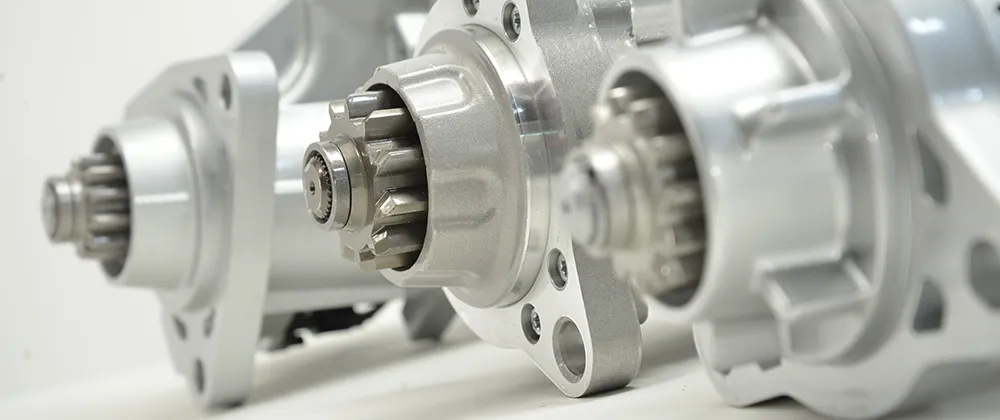
Alternator and Starter: Reduce Breakdowns, Not Just the Bill
An alternator or starter failure isn’t just a part to replace.
It often means downtime, delays, towing, impact on productivity, and a loss of confidence.
The goal of this article is simple: reduce the frequency of breakdowns by addressing root causes,
making the right diagnosis, and choosing parts suited to your real-world application.
Need help quickly?
Contact Camions BL or check out our
Services and
Parts pages.
To order online, you can also use
Excelerator.
What is the Partner of the Month at Camions BL
Each month, we highlight a trusted partner that helps improve truck reliability and performance.
The idea is to showcase 12 partners over 12 months with practical content: selection criteria, best practices,
and useful technologies.
Why? Because quality isn’t a luxury: it’s what protects your uptime, your deadlines, and your peace of mind.
Our logic is always the same: fewer breakdowns, fewer returns to the shop, more predictability.
Why Delco Remy
Delco Remy is a brand specialized in charging and starting systems for commercial vehicles,
buses, and off-highway applications, with a long-standing presence in these markets.
When it comes to alternators and starters, the goal isn’t to “make a part fit.”
The goal is to stabilize reliability in real conditions: high electrical load, frequent idling,
demanding start cycles, winter, vibration, dust, and humidity.
What really matters in the shop
- Reduce part number errors: the wrong part wastes time, leads to towing, and creates frustration.
- Reduce repeat failures: if the root cause isn’t fixed, even a new part can “fail again.”
- Match the part to the application: today’s electrical loads are not what they used to be.
Delco Remy also provides a search tool that allows you to cross-reference Delco Remy and competitor part numbers,
helping reduce ordering errors when starting from an existing number.
3-year warranty: a sign of confidence, to be validated per part
Delco Remy offers a 3-year warranty with unlimited mileage on several alternator and starter families,
with conditions that vary depending on the product and program.
In real life, a long warranty is often a good indicator of confidence, but it must always be validated on the exact part number sheet.
Alternator or starter: understanding symptoms without mistakes
Symptoms can look similar, especially when the basics (batteries, cables, grounds) are weak.
Before ordering a part, the first step is to identify whether the issue is lack of charge, a starting problem,
or a voltage drop in the circuit.
| Symptom | Common hypothesis | What to check first |
|---|---|---|
| Battery light, unstable voltage, weak accessories | Insufficient charge | Belt, tensioner, connections, grounds, load test at batteries |
| Batteries draining, especially at idle | Low output at low RPM or insufficient charge | Actual electrical demand, usage conditions, load test |
| Click without cranking, or very slow cranking | Lack of current at the starter | Batteries, voltage drops, positive cable, ground, solenoid |
| Intermittent starting | Unstable connection | Tightness, corrosion, damaged cable, ground, high resistance |
| Burning smell after several attempts | Over-cranking or low voltage | Stop, diagnose root cause, avoid “burning” the starter |
The real cause of repeat failures: the circuit, not the part
Many returns to the shop come from a simple scenario: the part is replaced, but the root cause remains.
Result: the new part operates under the same bad conditions.
The 5 most common root causes
- Worn-out batteries: they trigger a cascade of symptoms and overload the system.
- Voltage drops: cables and connections with too much resistance, often invisible to the eye.
- Poor grounding: a neglected ground point can create intermittent failures that are hard to reproduce.
- Belt and tensioner: slipping, misalignment, inadequate tension, especially under demanding cycles.
- Underspecified application: the alternator wasn’t selected based on real electrical load.
Useful diagnosis: the simple method that avoids mistakes
The goal is not to “test an alternator” or “test a starter” in isolation.
The goal is to validate the entire circuit, under load, in conditions close to real usage.
10-minute shop routine
| Step | Why | What it prevents |
|---|---|---|
| Visual inspection of batteries and terminals | Identify corrosion, cracks, loose connections | Unnecessary diagnosis and intermittent failures |
| Check main grounds | A weak ground mimics component failures | Replacing a starter that “has nothing wrong” |
| Load test at the batteries | Measure usable voltage where it matters | Relying on a “too good” reading elsewhere |
| Measure voltage drop to the starter during cranking | The starter needs current, not just open-circuit voltage | Thinking the starter is dead when the cable is at fault |
| Belt, tensioner, and alignment | Charging issues can be mechanical | Replacing the alternator when the belt is slipping |
The most costly mistakes
- Replacing without validating voltage drops: resistance remains, failure returns.
- Ignoring the belt: especially when charging seems “sometimes okay.”
- Underestimating real electrical load: accessories, PTO, inverter, lighting, heating, telematics.
- Multiple start attempts: over-cranking, heat, damage.
Choosing an alternator that performs in real life
An alternator is “good” when it maintains stable charge in your actual usage, not just on paper.
Key points to validate before ordering:
1) Your usage and loads
- Frequent idling or urban cycles: low-RPM performance matters.
- Added accessories: electrical demand may exceed OEM equipment.
- Harsh conditions: heat, salt, humidity, dust, vibration.
2) Technologies that really help
According to Delco Remy, some heavy-duty alternator families include features such as:
- Remote Sense: regulation logic that compensates voltage drops by reading voltage closer to the batteries,
helping stabilize charge where it matters. - Brushless design: fewer wear components related to brushes, aiming for increased durability in harsh environments.
- High-output design: useful when electrical demand is high and constant.
3) Reduce part number errors
Two “similar” alternators can differ in critical ways.
When starting from an existing number, a tool that allows cross-referencing Delco Remy and competitor numbers
can help secure the selection.
Choosing a starter that lasts
The starter handles high current draws and operates in heat and vibration.
The best way to extend its life is to protect the circuit and limit destructive conditions.
The 3 golden rules
- Avoid low voltage: it increases heat and stresses the system.
- Avoid over-cranking: if it doesn’t start, diagnose instead of insisting.
- Validate the entire circuit: cable, ground, connections, batteries.
Over-Crank Protection: reducing damage in tough conditions
Delco Remy highlights features like Over-Crank Protection on certain starter families.
The idea is to protect the starter from thermal damage in adverse conditions such as cold weather, reduced battery capacity,
high circuit resistance, or improper use.
Table: what to validate before ordering a part
This table acts as a safeguard to reduce returns, delays, and repeat failures.
| Point to validate | Why it’s critical | What it protects |
|---|---|---|
| Load test at batteries | Measures real usable voltage | Uptime and stability |
| Voltage drops on cables and grounds | Reveals hidden resistance | Reliable starting, less heat |
| Belt, tensioner, alignment | Avoids mechanically induced unstable charging | Batteries, alternator, shop time |
| Actual electrical load | Avoids chronic overload | Alternator lifespan |
| Current part number, application, mounting | Incompatibility can be invisible | Avoids ordering errors |
| Warranty per exact part number | Conditions vary by product | Predictability and risk management |
Printable checklist: reduce returns to the shop
- Check batteries, terminals, tightness, corrosion.
- Check main grounds and secondary grounding points.
- Perform a load test at the batteries.
- Measure voltage drop to the starter during cranking.
- Inspect belt, tensioner, alignment, signs of slipping.
- Confirm actual electrical load based on usage.
- Validate exact reference based on application, mounting, and existing number.
- Validate warranty on the exact part number sheet.
FAQ: the most common questions we get
How do you know if it’s the alternator or the battery?
Start with the basics: battery condition, connections, grounds, and load testing at the batteries.
A weak battery or voltage drop can mimic an alternator failure.
Why can a new alternator “fail” quickly?
Typical causes: weak batteries, voltage drops, slipping belt, underspecified alternator,
or installation creating mechanical stress. The new part is subjected to the same conditions.
My truck clicks but doesn’t crank, what should I do first?
Check batteries, connections, grounds, then measure voltage drop to the starter during the attempt.
If usable voltage drops too much, the issue may be in the circuit, not the starter.
Is Remote Sense useful for a fleet?
Remote Sense helps stabilize charge by compensating certain voltage drops, depending on application and wiring.
It’s more beneficial when circuits are long and electrical demand is high.
Is Over-Crank Protection a universal solution?
No. It protects against over-cranking scenarios and adverse conditions.
Reliability always depends on the basics: batteries, cables, grounds, and engine diagnostics.
Is it worth buying a “cheaper” alternator or starter?
The real cost is often downtime and return to the shop.
The goal is to choose a part suited to the application and fix the root cause to avoid paying twice.
Go further with Camions BL
To improve overall reliability and reduce unexpected issues, these resources may also help:
- Signs your truck needs preventive maintenance
- Engine overheating: causes and prevention
- Brakes: when to replace pads
- Parts categories (batteries, filtration, lighting, etc.)
- Financing
- Careers
- About
Need a diagnosis or a part
If you have a charging issue, hard starting, or intermittent failure, the most effective approach is to start with
your symptoms and real usage (accessories, idling, conditions, frequency), then contact us.
Sources and useful links
- Delco Remy: History of Delco Remy
- Delco Remy: Find a Part (cross-referencing)
- Delco Remy: 40SI (Remote Sense, displayed warranty)
- Delco Remy: 38SI (displayed warranty)
- Delco Remy: 55SI (description and uses)
- Delco Remy: 39MT (Over-Crank Protection)
- Delco Remy: Over-Crank Protection (explanation)
- Delco Remy: Download literature (brochures, guides)
